

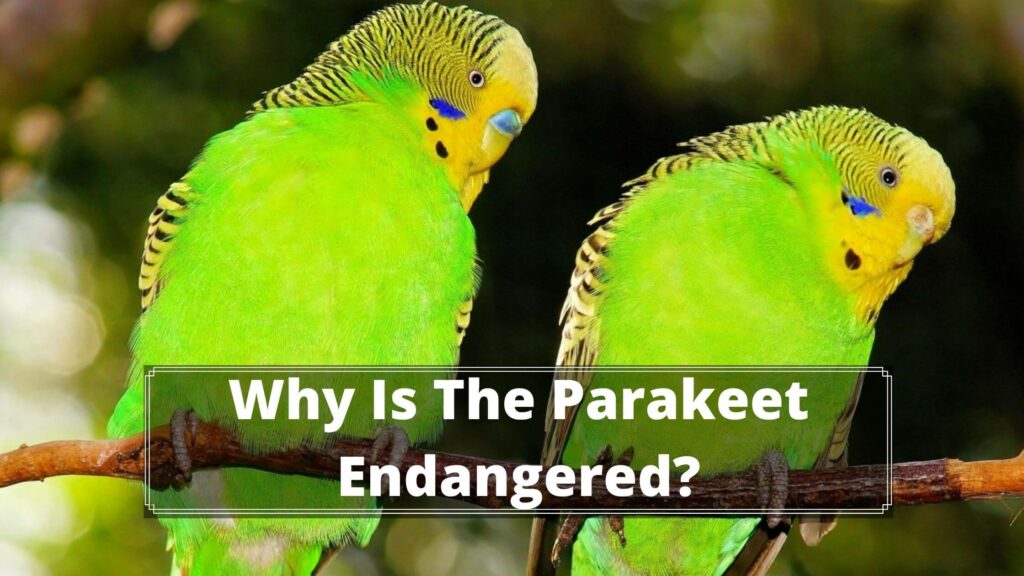
Parakeets are among the most popular and recognizable birds in the world. Their bright colors, playful personalities, and intelligence make them favorites among bird enthusiasts and pet owners alike. However, many people wonder whether parakeets are endangered and if some species face extinction.
The answer is both yes and no.
Not all parakeets are endangered. In fact, some species maintain healthy populations and even thrive in urban environments. However, several parakeet species have experienced dramatic declines, and a few now face serious extinction risks.
Their worldwide population is reducing due to loss of habitat and poaching. ( Now, there are as few as 250 adult grey-breasted parakeets).
Sometimes, climate change also disrupts their breeding process and often destroys their habitat, putting their survival at risk.
In this guide, we’ll explore which parakeets are endangered, why their populations are declining, and what conservationists are doing to help protect them.
What Is a Parakeet?
The term “parakeet” refers to a group of small to medium-sized parrots with long tail feathers.
Parakeets occur across:
- Australia
- Asia
- Africa
- Central America
- South America
The most familiar species is the Budgerigar, often called a budgie.
However, hundreds of parrot species fall within the broader parakeet category.

Are Parakeets Endangered?
Not all parakeets are endangered.
Some species remain abundant, while others are threatened or critically endangered.
Population status depends on factors such as:
- Habitat availability
- Human activity
- Illegal wildlife trade
- Predation
- Climate change
Consequently, conservation status varies greatly between species.
Why Are Some Parakeets Endangered?
Several major factors contribute to parakeet declines.
Habitat Loss
Habitat destruction remains the greatest threat.
Forests disappear due to:
- Agriculture
- Logging
- Urban development
- Mining
When forests disappear, parakeets lose:
- Nesting sites
- Food sources
- Shelter
Illegal Wildlife Trade
Colorful parrots remain highly desirable pets.
Illegal trapping can devastate wild populations.
Poachers often remove:
- Eggs
- Chicks
- Adult birds
from natural habitats.
Many captured birds never survive transport.
Invasive Predators
Introduced predators create serious problems.
Common threats include:
- Cats
- Rats
- Mongooses
- Possums
Many island parakeets evolved without these predators and lack effective defenses.
Climate Change
Changing climate conditions affect:
- Food availability
- Breeding success
- Habitat quality
Severe weather events can also destroy nesting areas.
Disease
Disease outbreaks occasionally affect small populations.
Species with limited numbers often struggle to recover from widespread illness.
Common Parakeet Species That Are Not Endangered
Several popular parakeets currently maintain stable populations.
Budgerigar
Budgerigar
The Budgerigar is one of the world’s most common parrots.
Wild populations remain widespread across Australia.
Monk Parakeet
Monk Parakeet
Also known as the Quaker Parrot, this species thrives in parts of South America and has established wild populations in several countries.
Ring-necked Parakeet
Rose-ringed Parakeet
This adaptable species successfully inhabits cities, suburbs, and natural habitats across multiple continents.
Endangered and Threatened Parakeet Species
Unfortunately, several parakeets face significant conservation challenges.
1. Orange-bellied Parrot
Orange-bellied Parrot
The Orange-bellied Parrot ranks among the world’s most endangered parrots.
Conservation Status
- Critically Endangered
Range
- Australia
Major Threats
- Habitat destruction
- Predation
- Small population size
- Climate-related habitat changes
Conservation programs actively breed these birds in captivity to prevent extinction.
2. Echo Parakeet
Echo Parakeet
The Echo Parakeet once approached extinction.
Range
- Mauritius
Threats
- Habitat loss
- Invasive species
- Cyclones
Conservation efforts have significantly improved its numbers, making it one of the world’s notable bird recovery success stories.
3. Golden Parakeet
Golden Parakeet
This stunning yellow parakeet inhabits the Amazon region.
Threats
- Deforestation
- Illegal pet trade
- Habitat fragmentation
Its bright coloration unfortunately increases demand among wildlife traffickers.
4. Night Parrot
Night Parrot
Although technically classified as a parrot rather than a traditional parakeet, the Night Parrot deserves mention because of its extreme rarity.
For decades, many scientists feared it had become extinct.
Threats
- Predators
- Habitat degradation
- Fire
5. Paradise Parakeet (Extinct)
Paradise Parrot
The Paradise Parakeet serves as a reminder of what can happen when conservation fails.
Status
- Extinct
Causes
- Habitat destruction
- Overgrazing
- Nest predation
The species disappeared during the early twentieth century.
Which Parakeet Species Are Closest to Extinction?
Several species remain especially vulnerable.
Examples include:
- Orange-bellied Parrot
- Night Parrot
- Blue-winged Parrot populations in some regions
- Certain island parakeet populations
Because many of these species have limited ranges, even small environmental changes can have major consequences.
Conservation Efforts Helping Parakeets
Fortunately, many organizations work to protect endangered parrots and parakeets.
Habitat Protection
Governments and conservation groups establish protected areas to preserve critical habitat.
Captive Breeding Programs
Captive breeding has helped prevent extinction for several species.
The Orange-bellied Parrot recovery program is a notable example.
Nest Monitoring
Scientists monitor nesting sites to improve breeding success.
Predator Control
Removing invasive predators helps vulnerable populations recover.
Public Education
Education programs reduce demand for illegally captured birds.
Can Pet Owners Help?
Yes.
Responsible bird ownership can support conservation.
Buy Captive-Bred Birds
Never purchase illegally sourced birds.
Support Conservation Organizations
Many bird-focused organizations fund habitat protection and recovery efforts.
Avoid Releasing Pet Birds
Released birds often struggle to survive and may disrupt local ecosystems.
Raise Awareness
Sharing information about endangered species encourages broader conservation support.
The Difference Between Rare and Endangered
People often confuse rarity with endangerment.
A species may be:
- Rare but stable
- Common but declining
- Endangered despite large populations
Conservation status depends on:
- Population trends
- Range size
- Threat levels
- Long-term survival prospects
Therefore, scientists evaluate many factors before assigning an endangered classification.
Why Some Parakeets Thrive While Others Decline
Adaptability plays a major role.
Species such as the Budgerigar and Rose-ringed Parakeet adjust well to:
- Human development
- Agricultural landscapes
- Urban environments
Meanwhile, specialized species often depend on:
- Specific habitats
- Particular food sources
- Limited geographic ranges
These species face greater extinction risks when conditions change.
Parakeet Endangered Species In UK
Ring-necked Parakeets found in Great Britain in the United Kingdom are nonnative species, which means they have been brought to the UK from some other place.
It is often believed that they were bred from the birds that had somehow escaped captivity. As these parakeets multiply rapidly, their population has constantly increased in the UK, and they are not endangered.
But their growing population is becoming a big problem for farmers as they feed on crops in large flocks, causing severe damage to the agricultural process.
Golden Parakeet Endangered
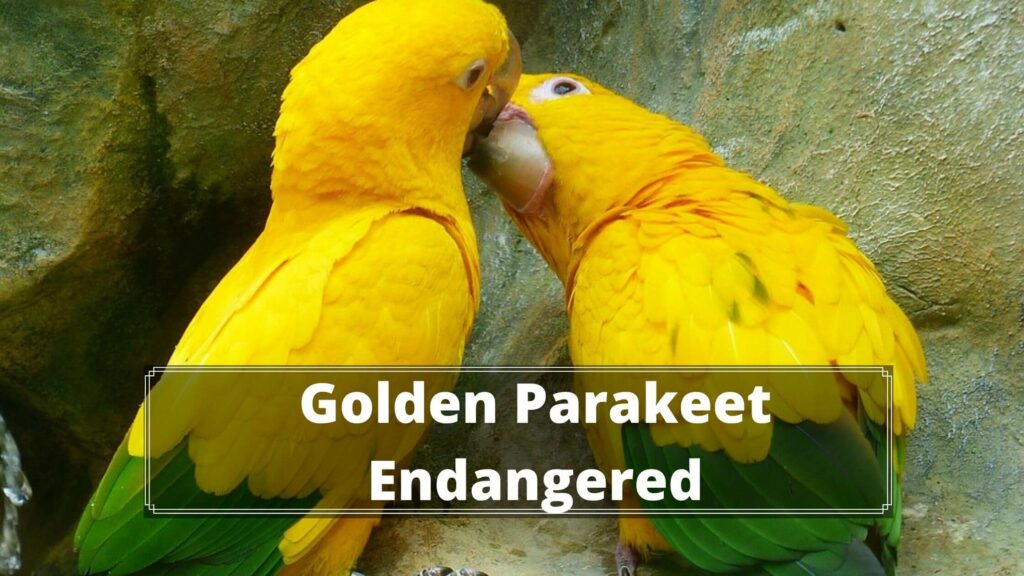
The Golden Parakeets, also called Golden Conures, are golden-yellow colored parakeets primarily found in Brazil.
They have been listed as endangered species in the CITES list and get constantly threatened by factors like flooding, deforestation, and their illegal capture for the pet trade.
Also, the locals often consider them invasive pests as they feed on the crops and hence get hunted by many individuals.
The Brazilian government is attempting to raise these Parakeets and bring them back to their natural habitat by taking help from the locals in Brazil.
- Interesting Further Reading
- Can Parakeets Tolerate Heat? If So, How Much?
- All About Parakeets Making Noise & Sounds
- Can Parakeets Live Alone? + Do Parakeets Need a Companion
- All About: Parakeets Breeding Behaviour!
New Zealand Endangered Parakeet
Orange-fronted Parakeets (also called half moon conure) are one of the rarest species of Parakeets in New Zealand. They are considered to be the most endangered species of New Zealand.
Their population has seen a significant decline because of deforestation, habitat loss, various diseases, and life-threatening predators. Thanks to the proper intensive management and captive breeding, else they would have been extinct.
There is currently a good boost in their breeding, and more than 140 Orange-fronted parakeets were born in this breeding season, as per the Department of Conservation.
Final Thoughts
Not all parakeets are endangered, but several species face serious conservation challenges. Habitat loss, illegal trapping, invasive predators, disease, and climate change continue to threaten vulnerable populations worldwide.
While adaptable species such as Budgerigars and Rose-ringed Parakeets remain widespread, others—including the Orange-bellied Parrot and Echo Parakeet—have required intensive conservation efforts to survive.
Understanding these threats helps bird lovers appreciate the importance of habitat protection and responsible wildlife conservation. With continued conservation work, many endangered parakeet species still have a chance to recover and thrive.
Frequently Asked Questions
1. Are Monk Parakeets Endangered?
No, Monk Parakeets are not endangered species. Their population is constantly increasing, and these parakeets are commonly found in various pet stores.
These are invasive species and often feed on crops, and their large-sized nests cause serious electricity transmission problems in many areas.
2. Which parakeet is the most endangered?
The Orange-bellied Parrot is considered one of the world’s most endangered parrot species.
3. Why are parakeets becoming endangered?
Habitat loss, illegal trade, predators, disease, and climate change contribute to declines.
4. Are Budgerigars endangered?
No. Wild Budgerigars remain widespread across Australia.
5. Is the Echo Parakeet endangered?
The Echo Parakeet remains vulnerable but has recovered significantly through conservation efforts.
6. Has any parakeet gone extinct?
Yes. The Paradise Parakeet became extinct in the twentieth century.
7. Does the pet trade affect wild parakeets?
Yes. Illegal trapping has harmed many wild populations.
8. Can endangered parakeets recover?
Yes. Conservation programs have successfully increased populations of several species.
9. What is the biggest threat to parakeets?
Habitat destruction remains the leading threat for most endangered species.
10. How can people help endangered parakeets?
Support conservation programs, protect habitats, and purchase only captive-bred birds.