

Some call them “The Bird of Peace” or the “The Messenger”, or “Rats with Wings”.
But Pigeons are one of the most common birds found living among Human habitats. Pigeons belong to the bird family Columbidae. There are hundreds of pigeon breeds. Some are the commonly seen domestic types and some are wild. Let’s look at some of the most common, from the most beautiful to the most bizarre pigeons.
Feral Pigeons:
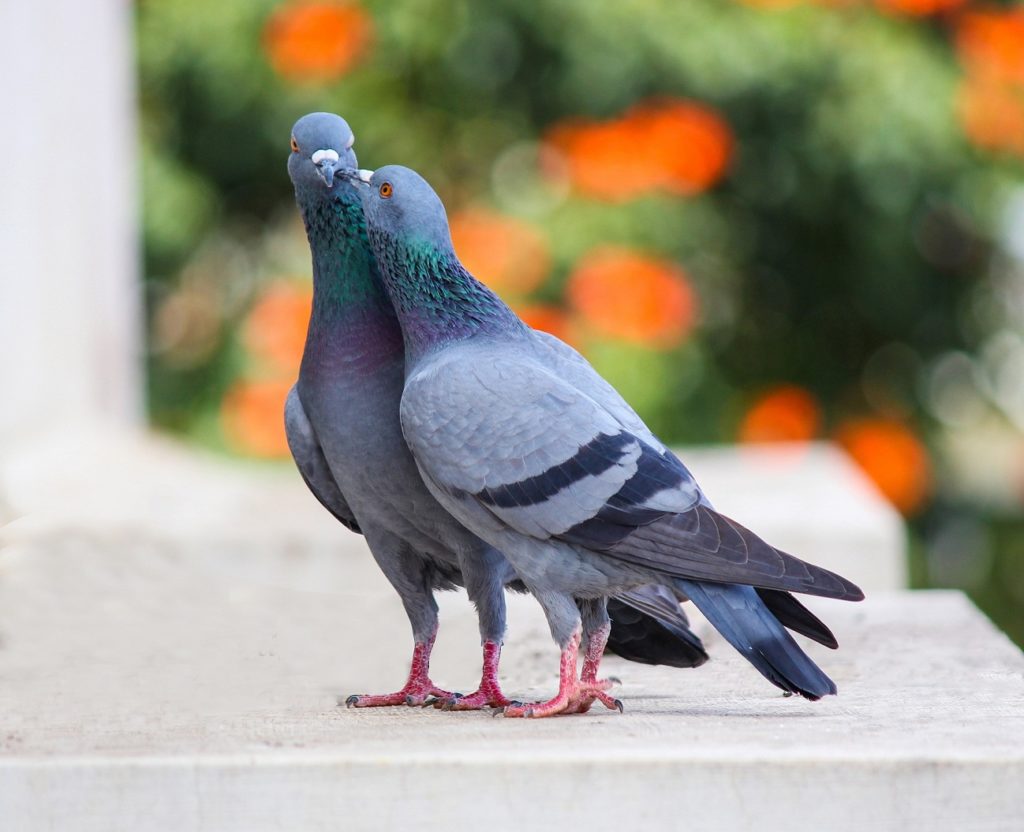
When most people think of a pigeon, the image that springs to mind is the ubiquitous, grey-and-purple-iridescent bird foraging for crumbs in a city park. However, this common street pigeon—a feral descendant of the wild Rock Dove (Columba livia)—represents only a tiny fraction of the incredible diversity found within this species.
The Astonishing Diversity of Pigeons
For thousands of years, humans have selectively bred pigeons for food, communication, sport, and sheer aesthetic beauty. This intensive selective breeding has resulted in a staggering morphological diversity that rivals, and perhaps even surpasses, that of domestic dogs.
In fact, Charles Darwin was so fascinated by the immense variety of domestic pigeons that he bred them extensively in his own backyard, using their dramatic physical differences to illustrate the principles of artificial selection in his groundbreaking work, On the Origin of Species.
Today, there are hundreds of recognized pigeon breeds worldwide. While they all belong to the exact same species and can theoretically interbreed, they are broadly categorized into major groups based on their primary use, physical characteristics, and flight abilities. Here is a detailed exploration of the fascinating types of pigeons.
1. Homing and Racing Pigeons
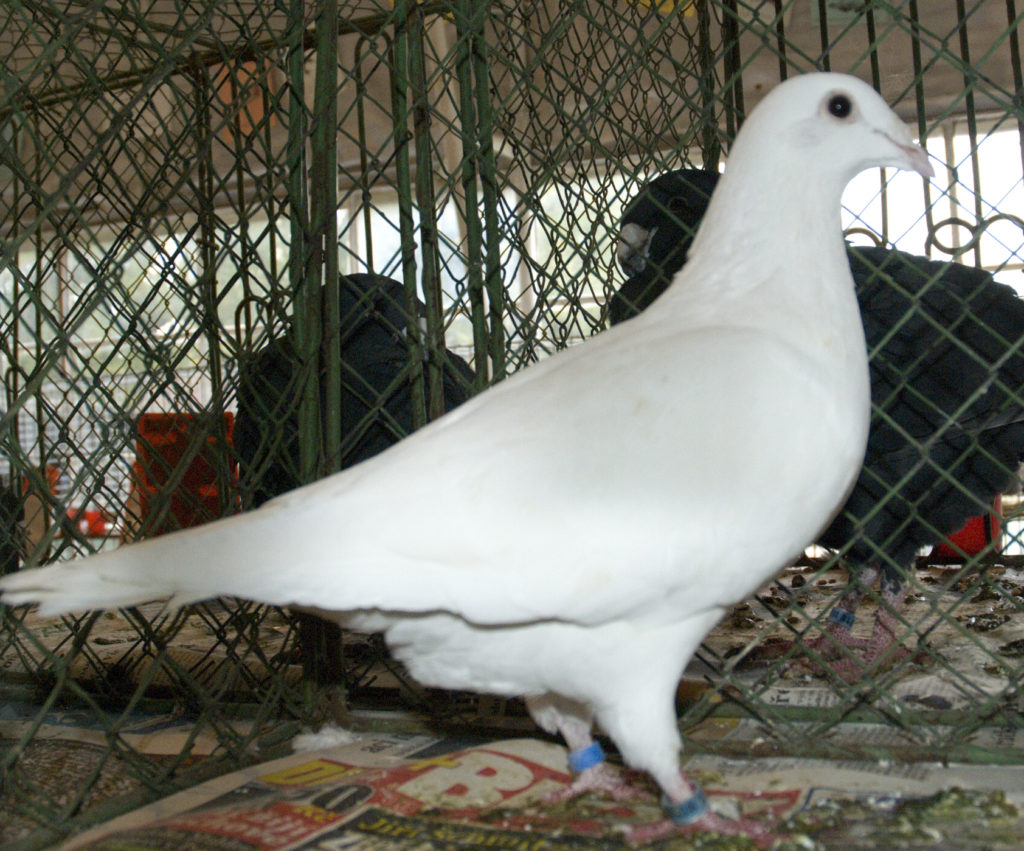
Homing pigeons are the elite athletes and navigators of the avian world. Bred for centuries for their unparalleled ability to find their way home from hundreds of miles away, these birds are muscular, sleek, and built for absolute endurance.
Bodlina CC Attribution-Share Alike 3.0
Racing Homers
The modern Racing Homer was developed primarily in Belgium during the 19th century by crossing several high-performing breeds, including the Smerle, the French Cumulet, and the English Carrier. Racing Homers are not bred for their appearance, but strictly for their aerodynamic physique, speed, and navigational intelligence. They possess a prominent, strong keel bone to anchor massive flight muscles and have tight, smooth feathering to reduce drag.
The homing instinct of these birds remains one of nature’s great marvels. Scientists believe they navigate using a complex combination of tools: magnetoreception (sensing the earth’s magnetic fields), a sun compass, olfactory cues (smell), and even the ability to detect low-frequency infrasound waves generated by the earth’s topography. Historically, these remarkable abilities made them invaluable as messengers during both World Wars, where birds like “Cher Ami” and “G.I. Joe” saved thousands of human lives by delivering critical messages across enemy lines.
Show Homers
As the popularity of racing grew, some fanciers began breeding homers exclusively for exhibition. The Show Homer has the basic aerodynamic shape of a racing bird but is bred to meet a highly specific aesthetic standard. They typically have a more exaggerated, perfectly curved head profile and a stouter build. While they retain the homing instinct, they are rarely flown, as their physical extremes make them slower and less agile than their racing counterparts.
2. Performing and Flying Breeds
While homing pigeons are bred to fly point-to-point, performing breeds are bred for how they behave while in the air. These birds exhibit unique neurological quirks and physical endurance traits that have been isolated and refined over generations.
Birmingham Rollers
Originating in Birmingham, England, the Birmingham Roller is perhaps the most famous performing pigeon. While in mid-flight, these birds have the extraordinary ability to perform rapid, backward somersaults. A high-quality Roller does not just tumble haphazardly; it spins like a tightly wound ball, rotating multiple times in a fraction of a second before recovering its flight path.
Fanciers fly these birds in flocks called “kits.” In competition, a kit is judged on how many birds roll simultaneously, the depth of the roll, and the speed of the rotation. The rolling behavior is a genetic trait, believed to be a localized seizure-like phenomenon triggered by flight, which the birds seem to enjoy and control.
Parlor Rollers
Taking the rolling mutation to its absolute extreme, the Parlor Roller is a pigeon that cannot fly at all. When released from the hand or placed on the ground, the bird immediately performs a series of backward somersaults across the floor. They are competed based on the distance they can roll across a measured pitch. Because they cannot fly, they require secure, single-level housing to keep them safe from predators.
Tipplers
Tipplers are the marathon runners of the pigeon world. Unlike Homers that fly fast to a destination, Tipplers are bred for sheer endurance flying around their home loft. A well-trained kit of Tipplers can remain airborne, circling high above their loft, for astonishing lengths of time. The world record for continuous Tippler flight is over 22 hours. They are small, lightweight, and incredibly efficient flyers that require a specialized, high-energy diet to sustain their marathon flights.
3. Utility and Meat Breeds
Before the advent of modern refrigeration and commercial poultry farming, pigeons were primarily kept as a reliable, year-round source of fresh meat. “Squab” (the meat of a young pigeon) was considered a delicacy and a staple. Utility breeds are characterized by their massive size, heavy build, and generally poor flight capabilities.
Graham Manning CC Attribution-Share Alike 3.0
King Pigeons
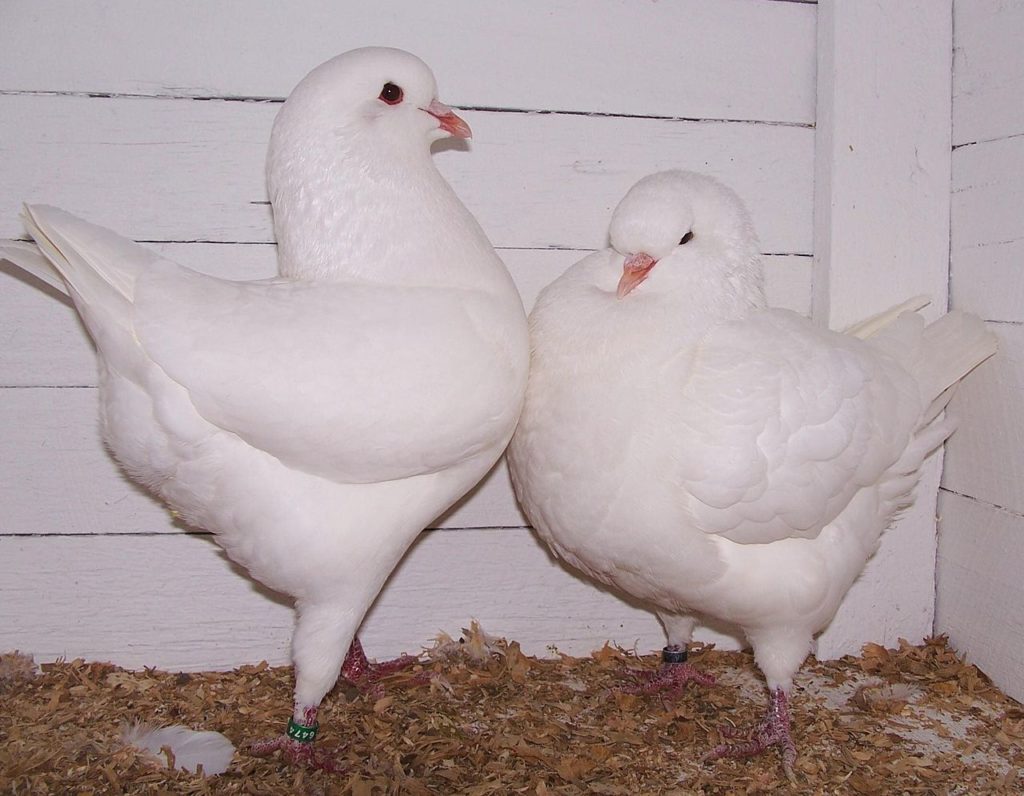
The King pigeon is an American breed developed in the 1890s by crossing several large breeds, including the Roman Runt, the Maltese, and the Homer. They are massive, heavy-set birds, often weighing nearly two pounds. Because of their heavy bodies, they are extremely poor flyers, barely able to lift themselves more than a few feet off the ground.
Today, while still used in commercial squab production, King pigeons have become incredibly popular as indoor house pets. Due to their inability to fly away, their calm and docile temperament, and their striking appearance (most commonly pure white, though they come in ash-red, blue, and silver), rescued Kings make exceptionally affectionate and manageable companions.
The Giant Runt
The name “Runt” is entirely ironic. Originating in ancient Rome, the Giant Runt is the largest of all domestic pigeon breeds. They can weigh up to three pounds and boast a wingspan approaching three feet. They are broad, deep-chested birds that look more like small chickens than pigeons. Like the King, they are strictly ground-dwellers and require housing with ramps or low perches, as a fall from a high ledge can result in severe injury to their heavy bodies.
4. Fancy Pigeons: Structural and Feather Mutations
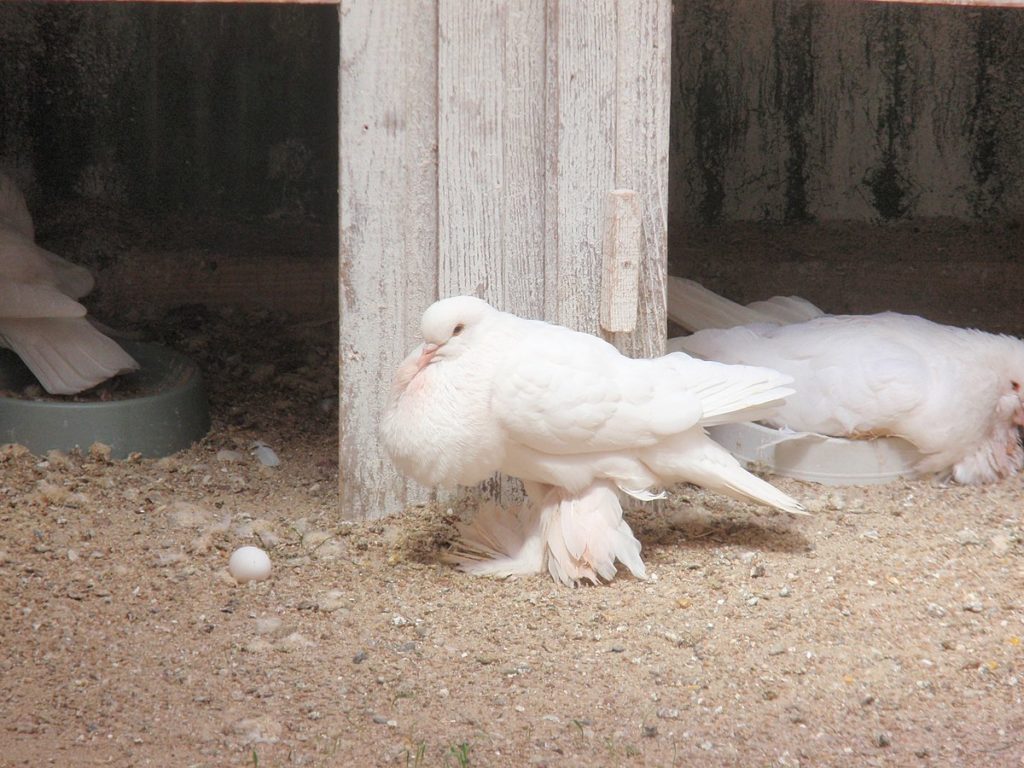
Fancy pigeons are bred entirely for exhibition and aesthetic appeal. Fanciers have capitalized on natural genetic mutations to create birds with bizarre, beautiful, and sometimes structurally limiting characteristics. Because of their extreme physical traits, nearly all fancy pigeons must be kept in highly secure aviaries, as they cannot evade predators or survive in the wild.
Wierzba CC Attribution-Share Alike 4.
Pouters and Croppers
Pouters and Croppers are famous for their ability to significantly inflate their crop (an organ in the throat used to store food) with air. When inflated, the crop forms a massive, spherical “globe” on the front of the bird’s chest.
Breeds like the English Pouter are remarkably tall and slender, standing sharply upright with extremely long legs covered in feathers, making them look as if they are wearing trousers. The Brunner Pouter is a smaller, highly energetic breed known for its “bounding” gait—it hops and struts enthusiastically on its toes while its crop is inflated. Despite their bizarre appearance, Pouters are renowned for having some of the friendliest and most interactive personalities of any pigeon breed.
Fantails
Originating in India, the Fantail is one of the oldest and most recognizable fancy breeds. While a standard pigeon has 12 to 14 tail feathers, a Fantail can possess anywhere from 30 to 40. These feathers are held continuously fanned out in a flat, semicircular shape resembling a miniature peacock.
They also exhibit a trait called “Zitterhals” (trembling neck), where they constantly vibrate their heads and necks backwards until they rest against the base of their tail. Because their massive tails catch the wind like a sail, they are clumsy flyers. Unfortunately, white Fantails are frequently and unethically used for “dove releases” at weddings; lacking homing instincts and the ability to fly quickly, they usually perish shortly after release.
Jacobins
The Jacobin is named after the Jacobin order of monks, known for their distinctive hooded cowls. This pigeon features a magnificent, highly developed feather structure around its neck and head. The feathers grow upwards and forwards to form a thick “hood,” a “mane” at the back, and a “chain” running down the front of the neck.
In show-quality Jacobins, the hood is so thick and prominent that the bird’s head is completely hidden from the side, severely restricting its peripheral vision. Because of this visual impairment, Jacobins require very calm environments. During the breeding season, caretakers must carefully trim the hood feathers; otherwise, the birds cannot see well enough to mate successfully or feed their young.
Frills and Owls
This family of pigeons is characterized by a “frill” of feathers running down the center of their chest, appearing as if the feathers have been zipped backwards. However, their most defining feature is their highly mutated facial structure.
Breeds like the Old German Owl, the African Owl, and the Oriental Frill (such as the visually stunning Blondinette and Satinette varieties) have large, round heads, incredibly large eyes, and almost non-existent beaks. Their beaks have been bred to be so profoundly short and thick that they look like tiny parrots.
This extreme facial mutation comes with a significant husbandry challenge: “short-faced” pigeons cannot regurgitate food properly to feed their own squabs. Therefore, breeders must maintain a separate flock of “pumpers” or “feeders”—usually reliable, long-beaked homing pigeons—to act as foster parents. The Owl’s eggs are swapped into the Homer’s nest, and the Homers raise the short-faced chicks.
5. Color Pigeons
While breeds like Pouters and Owls are judged on their structural shapes, Color Pigeons are bred almost exclusively for the perfection of their plumage color, patterns, and specific feather textures. They generally retain the standard shape of a wild field pigeon but look as if they have been exquisitely painted.
The Archangel
The Archangel (known as the Gimpel in its native Germany) is celebrated for its breathtaking metallic sheen. The most traditional coloration is a rich, vibrant copper or bronze on the body, contrasted with jet-black or brilliant blue wings. What sets the Archangel apart is the intense iridescence of its feathers; in the sunlight, an Archangel looks as though it has been cast from polished metal. They also feature a small, sharp crest of feathers at the back of the head.
Ice Pigeons and Swallows
The Ice Pigeon takes its name from its incredibly unique feather coloration and texture. The feathers produce an excessive amount of “powder down” (keratin dust), which completely coats the bird. This powder mutes their black or blue markings, giving the entire pigeon an ethereal, frosted, ice-blue appearance.
Swallow Pigeons, originating in regions like Saxony and Thuringia, are famous for their precise markings. They typically have a pure white body with beautifully colored wings (in black, blue, red, or yellow) and heavily “muffed” (feathered) feet that resemble massive slippers, paired with a small crest on their head.
Conclusion
The sheer variety of pigeon breeds is a testament to the incredible genetic plasticity of Columba livia. From the awe-inspiring endurance of the racing homer to the comical acrobatics of the parlor roller, and the regal, structural extremes of the Jacobin and Fantail, there is a pigeon bred to suit almost any avicultural interest. Moving far beyond their reputation as feral street scavengers, these distinct and carefully cultivated breeds represent a living history of human-animal partnership, showcasing the profound impact that centuries of selective breeding can have on a single species.